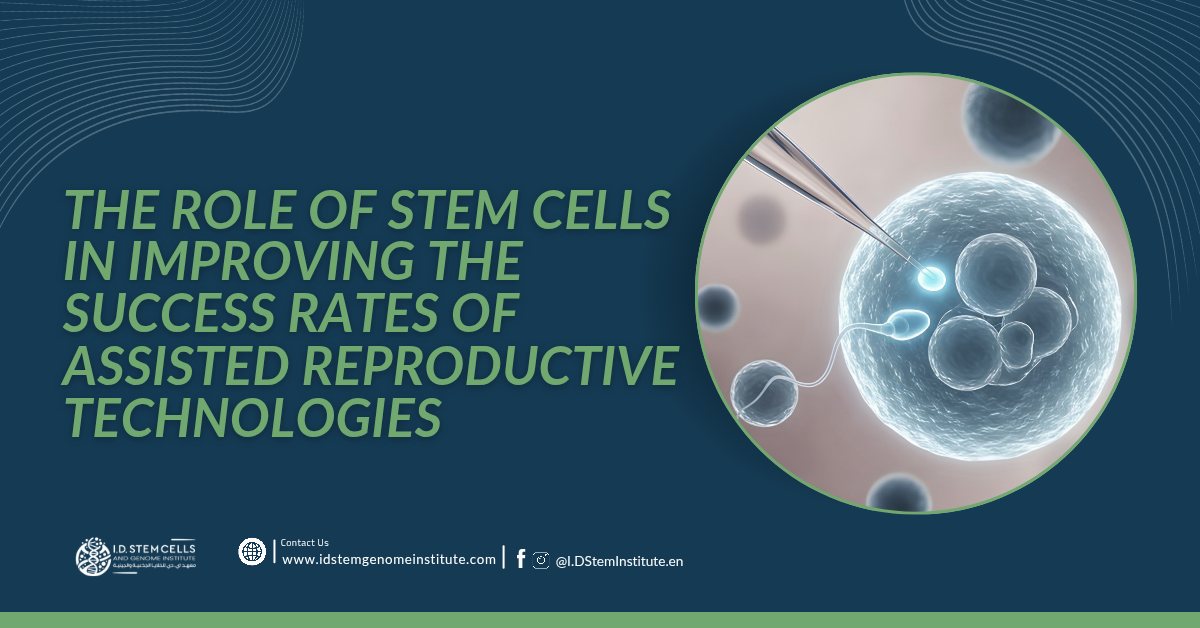
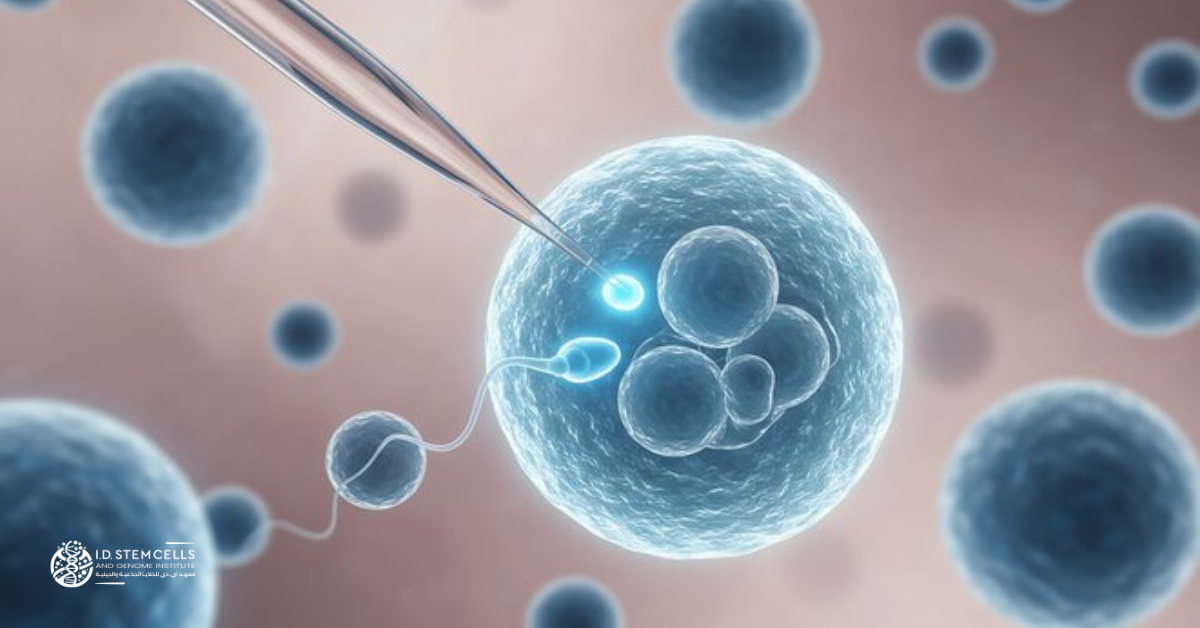
Infertility is a global health challenge affecting approximately 15% of couples. Assisted reproductive technologies such as ICSI and IVF have improved the chances of pregnancy for some couples, but there are several limitations to the success of these techniques, especially in advanced cases or those related to egg and sperm quality and endometrial function. Success rates also decline with age due to diminished ovarian reserve or damage to the uterine lining.
In recent years, stem cells have become a focus of research in an effort to improve the reproductive response through tissue and immune regeneration mechanisms and the stimulation of vital biological functions. Recent studies indicate that stem cells can play a promising role in enhancing the outcomes of assisted reproductive technologies through multiple therapeutic and regenerative mechanisms, opening new avenues for treatment.
Types of Stem Cells That Can Be Integrated with Assisted Reproductive Technologies
1. Mesenchymal Stem Cells (MSCs) Derived from Bone Marrow or Adipose Tissue:
Types of Stem Cells That Can Be Integrated with Assisted Reproductive Technologies
1. Mesenchymal Stem Cells (MSCs) Derived from Bone Marrow or Adipose Tissue:
Mesenchymal stem cells repair reproductive tissues and improve the immune environment. Studies have shown that mesenchymal stem cells can improve the receptivity of the uterine lining to implantation and enhance early pregnancy support.
2. Induced pluripotent stem cells (iPSCs):
These induced pluripotent stem cells are capable of differentiating into germ cells and may be used in the future to produce artificial sperm or eggs.
Potential Mechanisms of Stem Cells for Improving Reproductive Vitality
Mesenchymal stem cell s have been used to regenerate ovaries or testes with high efficacy in animal models and preliminary human trials, meaning a greater chance of pregnancy even for those with previous failed attempts.
Mesenchymal stem cells repair reproductive tissues and improve the immune environment. Studies have shown that mesenchymal stem cells can improve the receptivity of the uterine lining to implantation and enhance early pregnancy support.
2. Induced pluripotent stem cells (iPSCs):
These induced pluripotent stem cells are capable of differentiating into germ cells and may be used in the future to produce artificial sperm or eggs.
Potential Mechanisms of Stem Cells for Improving Reproductive Vitality
Mesenchymal stem cell s have been used to regenerate ovaries or testes with high efficacy in animal models and preliminary human trials, meaning a greater chance of pregnancy even for those with previous failed attempts.
Potential mechanisms of stem cells that help improve the outcomes of assisted reproductive technologies include:
Stimulating the regeneration of endometrial cells to support implantation.
Improving ovarian function and increasing the production of reproductive hormones.
Improving sperm and egg quality.
Producing artificial gametes and developing artificial embryo models.
Enhancing the immune environment to reduce inflammation and support early embryonic development.
Potential mechanisms of stem cells that help improve the outcomes of assisted reproductive technologies include:
Stimulating the regeneration of endometrial cells to support implantation.
Improving ovarian function and increasing the production of reproductive hormones.
Improving sperm and egg quality.
Producing artificial gametes and developing artificial embryo models.
Enhancing the immune environment to reduce inflammation and support early embryonic development.
Applications and Results
In females: Studies have shown that injections of bone marrow-derived mesenchymal stem cells (BMDSCs) improve the number of mature eggs in women with poor response to ovulation (POR). In males: Results have confirmed that mesenchymal stem cells can treat non-obstructive infertility (NOA) by stimulating sperm production. MSC injection trials have shown improved sperm count in 40% of cases. By 2030, stem cells may become an essential part of assisted 0reproductive technologies, with the potential to produce artificial eggs or sperm. This opens up vast medical possibilities for treating severe infertility. However, large-scale clinical trials are still needed to confirm long-term safety.
At the I.D. Stem Cells and Genome Institute, we keep abreast of the latest scientific developments in the field of stem cell and gene therapy and regenerative medicine. If you are interested in learning more about the potential benefits of these treatments and the latest research findings, please feel free to contact us.
Applications and Results
In females: Studies have shown that injections of bone marrow-derived mesenchymal stem cells (BMDSCs) improve the number of mature eggs in women with poor response to ovulation (POR). In males: Results have confirmed that mesenchymal stem cells can treat non-obstructive infertility (NOA) by stimulating sperm production. MSC injection trials have shown improved sperm count in 40% of cases. By 2030, stem cells may become an essential part of assisted 0reproductive technologies, with the potential to produce artificial eggs or sperm. This opens up vast medical possibilities for treating severe infertility. However, large-scale clinical trials are still needed to confirm long-term safety.
At the I.D. Stem Cells and Genome Institute, we keep abreast of the latest scientific developments in the field of stem cell and gene therapy and regenerative medicine. If you are interested in learning more about the potential benefits of these treatments and the latest research findings, please feel free to contact us.