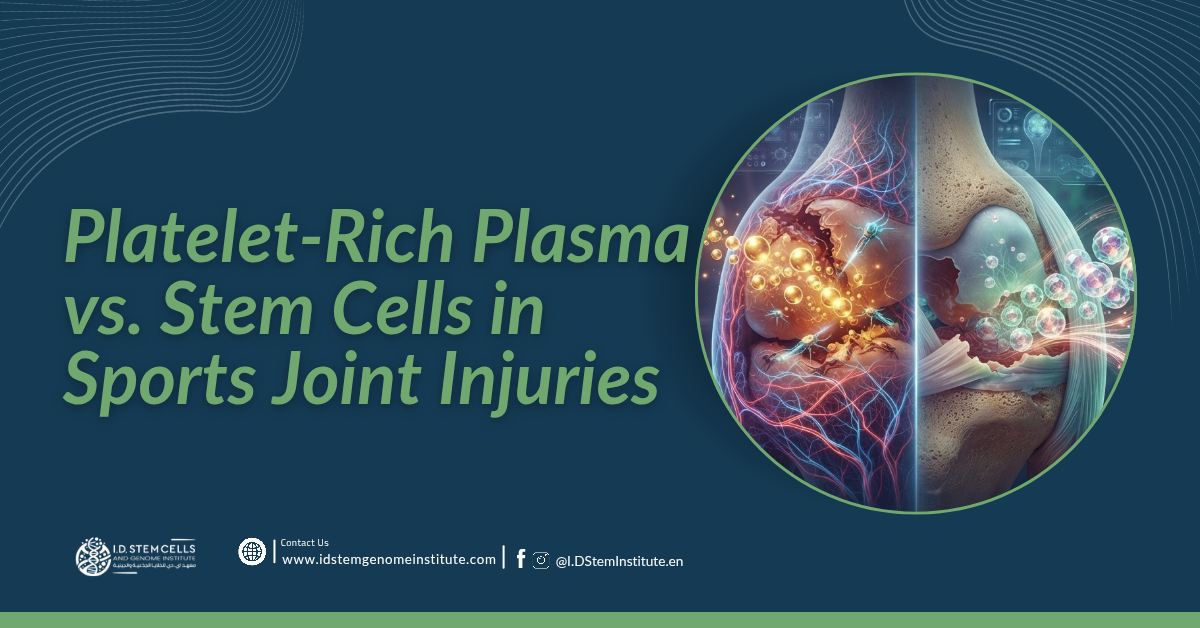
Regenerative therapies have become an important part of the medical discussion surrounding sports joint injuries, especially with the growing interest in reducing recovery times and improving athletic performance. Two of the most frequently discussed regenerative treatment options for sports joint injuries are platelet-rich plasma (PRP) and stem cell therapy.
Although both treatments fall under the umbrella of regenerative medicine, their mechanisms of action differ significantly in treating joint injuries.
What is the difference between platelet-rich plasma (PRP) therapy and stem cell therapy?
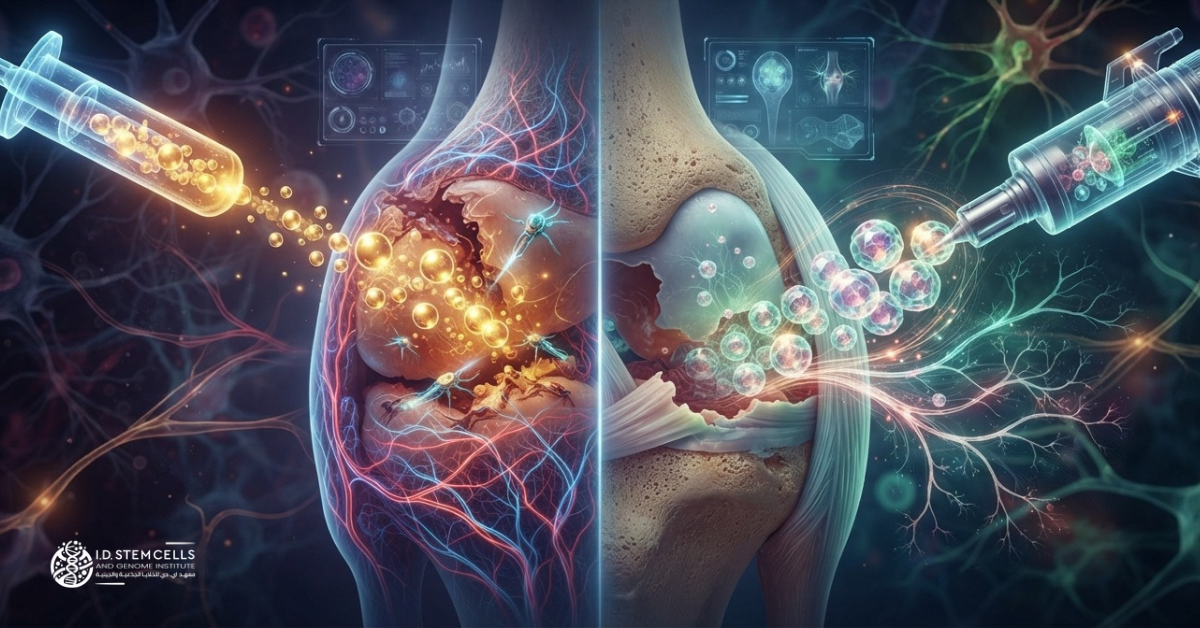
PRP therapy involves extracting plasma from the patient's own blood. This plasma contains a high concentration of platelets and growth factors that promote healing and reduce inflammation. Stem cells, particularly
What is the difference between platelet-rich plasma (PRP) therapy and stem cell therapy?
PRP therapy involves extracting plasma from the patient's own blood. This plasma contains a high concentration of platelets and growth factors that promote healing and reduce inflammation. Stem cells, particularly
When is each used in cases of joint injuries?
mesenchymal stem cells (MSCs), play a role in supporting the repair and regeneration of damaged tissues, regulating the inflammatory response (immunomodulation), and improving the intra-articular environment. Studies indicate that platelet-rich plasma (PRP) therapy may be a suitable option for some mild to moderate injuries, particularly when inflammation or pain is present without significant tissue damage. Stem cell therapy, on the other hand, is gaining increasing attention in more complex cases with significant tissue damage, such as:
Cartilage injuries.
Early degenerative changes.
Some tendon and ligament injuries.
Cases that have not responded to conventional treatment.
When is each used in cases of joint injuries?
mesenchymal stem cells (MSCs), play a role in supporting the repair and regeneration of damaged tissues, regulating the inflammatory response (immunomodulation), and improving the intra-articular environment. Studies indicate that platelet-rich plasma (PRP) therapy may be a suitable option for some mild to moderate injuries, particularly when inflammation or pain is present without significant tissue damage. Stem cell therapy, on the other hand, is gaining increasing attention in more complex cases with significant tissue damage, such as:
Cartilage injuries.
Early degenerative changes.
Some tendon and ligament injuries.
Cases that have not responded to conventional treatment.
Some systematic reviews have shown that both treatments can help improve pain and function in some patients, but the degree of improvement varies depending on the type of injury and the treatment method. Some recent studies also suggest that stem cells may provide a relatively longer-lasting effect in some joint conditions, but the results vary depending on the type of injury, the cell source, the number of sessions, and the experience of the treatment center. Other studies have indicated that combining mesenchymal stem cell (MSC) therapy with platelet-rich plasma (PRP) may contribute to improved pain and mobility in some cases of knee joint injuries and problems, compared to some conventional treatments. This is believed to be due to the growth factors present in plasma (PRP) helping to support stem cell activity and improve the intra-articular environment. However, further long-term studies are still needed to confirm these findings.
It is also important to emphasize that the success of any regenerative treatment for joint injuries does not depend solely on regenerative therapy. Rehabilitation programs, muscle strengthening, controlled exercise, and lifestyle and nutritional modifications should be integrated with regenerative therapy.
At the I.D. Stem Cells and Genome Institute, we keep abreast of the latest scientific developments in the field of stem cell and gene therapy and regenerative medicine. If you are interested in learning more about the potential benefits of these treatments and the latest research findings, please feel free to contact us.