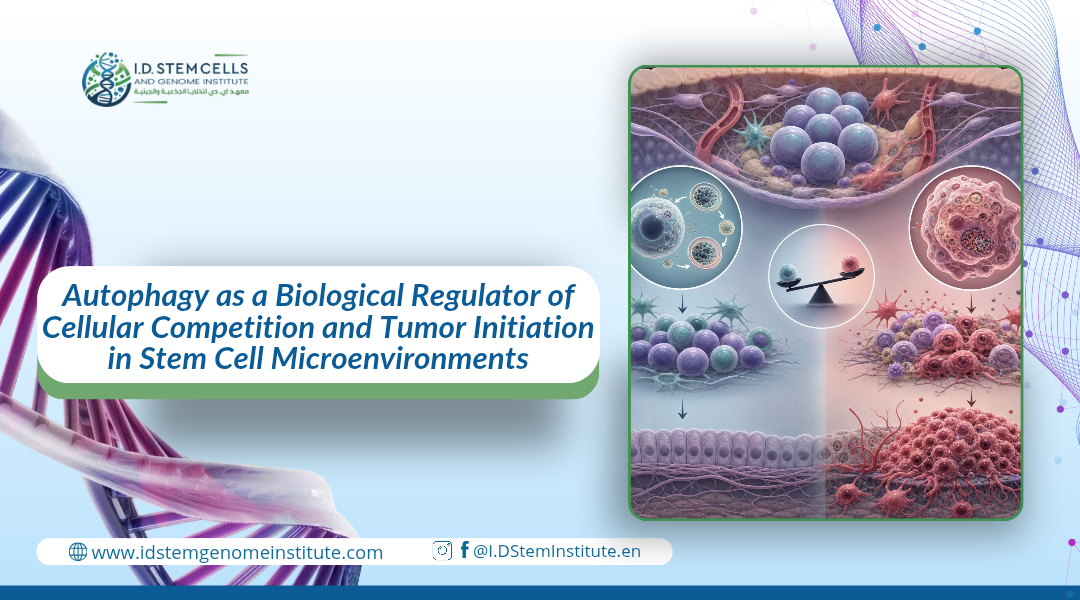
Adult stem cells undergo dynamic competition within their microenvironments (niches) to maintain tissue homeostasis. Cell displacement from these niches initiates differentiation. While healthy cells follow a neutral drift pattern through random cell replacement, cells carrying tumorigenic mutations gain a competitive advantage known as biased drift, enabling them to eliminate neighboring cells and initiate tumor formation. Autophagy is a vital metabolic mechanism for recycling cellular components. While its role in fueling tumor growth under stress conditions is well-established, its impact on stem cell spatial competition remains unclear.This study utilizes Drosophila ovarian germ cells as an ideal model due to their microstructure, which allows for monitoring competition at the single-cell level. Using this model, we aim to elucidate the role of autophagy in conferring competitive superiority to tumor-like cells within their niche.
.png)