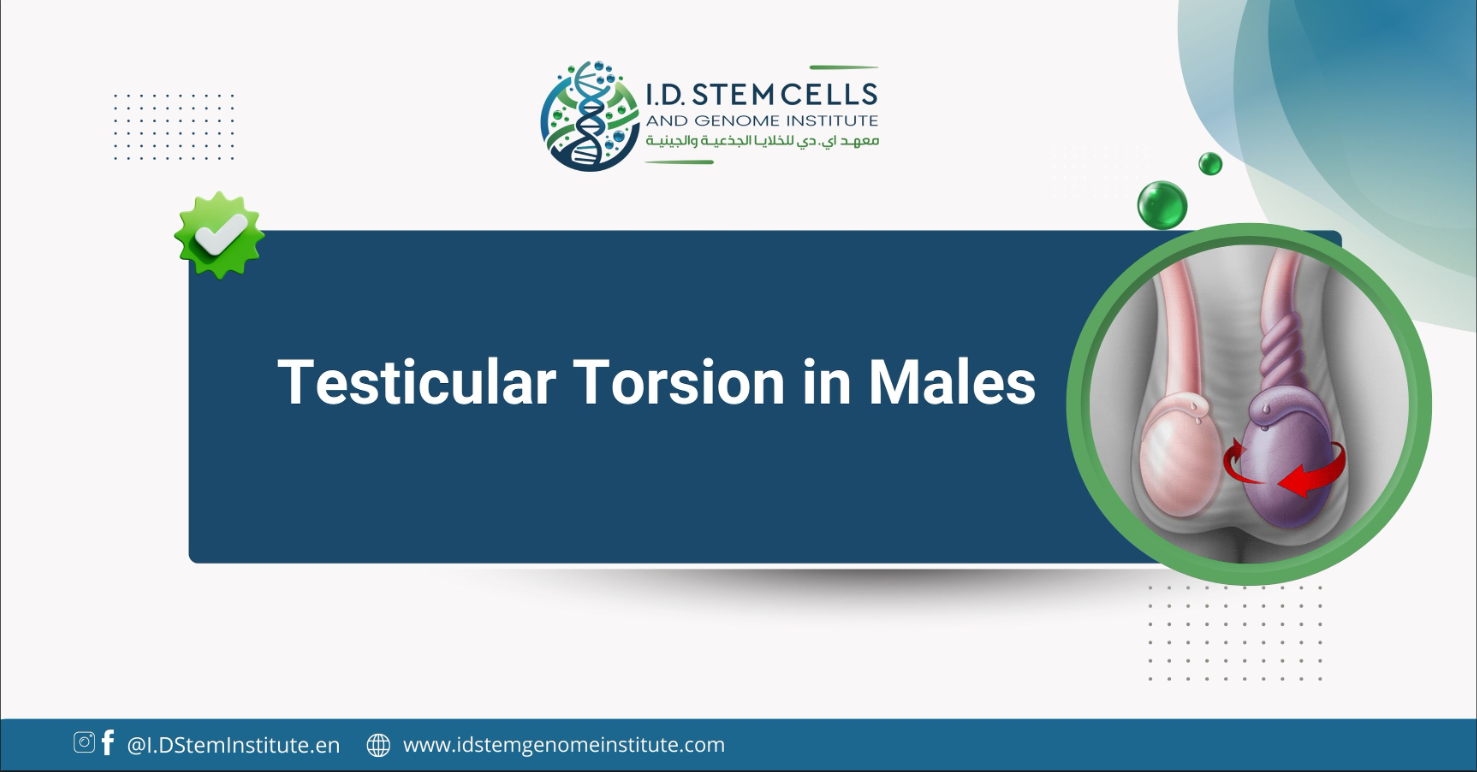
Testicular torsion is an emergency and can lead to primary hypogonadism. Testicular torsion begins suddenly, and patients experience intractable pain due to decreased blood supply to the testicles. Testicular torsion also causes injury to germ cells, depending on the ischemia and severity of cord twisting.
In cases of testicular torsion, ischemia is usually followed by reperfusion, which in turn leads to impaired spermatogenesis and release of toxic substances such as free radicals from damaged tissues into the circulation.
During reperfusion, endothelial vascular injury and microcirculatory disturbances lead to impaired testicular function.
Testicular torsion can lead to permanent testicular dysfunction; however, reduction and fixation of the spermatic cord within 6 hours can significantly reduce the likelihood of this occurring. In cases with a higher degree of torsion, cell necrosis occurs within 4 hours, and a 360-degree twisted cord can lead to complete or severe testicular atrophy within 24 hours.
The recommended therapeutic approach is to improve ischemic conditions, promote spermatogenesis, and regulate the immune response. Based on immunomodulatory effects, differentiation potential, and endocrine support
Studies have also shown that stem cells successfully treat infertility caused by torsion. Stem cells injected into mice with testicular torsion restored fertility due to upregulation of pre- and post-meiotic genes, which improved testicular structure and function