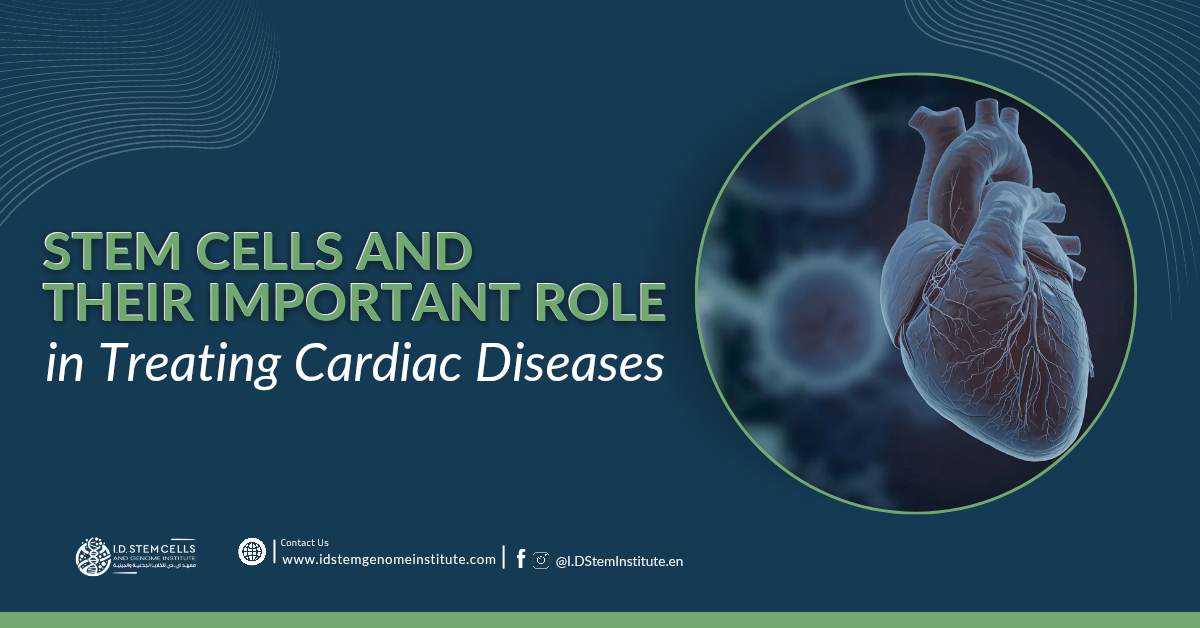
Stem cells are an attractive source for cardiac regeneration, and there is growing interest in their use in treating various heart diseases. The goal is to rebuild functional myocardium either by transplanting exogenous stem cells or by activating native stem cells to stimulate self-repair.
Types of Stem Cells Used in Treating Cardiac Diseases
Embryonic stem cells (ESCs): These can differentiate into any cell type, including cardiomyocytes. However, their use raises ethical and immunological concerns.
Types of Stem Cells Used in Treating Cardiac Diseases
Embryonic stem cells (ESCs): These can differentiate into any cell type, including cardiomyocytes. However, their use raises ethical and immunological concerns.
Induced pluripotent stem cells (iPSCs): These are produced by reprogramming adult somatic cells to a pluripotent state, enabling them to differentiate into various cell types, including cardiomyocytes. These cells hold great potential in cardiac regeneration due to their ability to differentiate into cardiac cells and their autologous use, reducing the risk of immune rejection.
Mesenchymal stem cells (MSCs): These are found in bone marrow and other tissues and are characterized by their ability to differentiate into various cell types, including cardiomyocytes. However, their ability to differentiate into cardiac cells is limited.
Cardiac stem cells (CSCs): These cells are found in the heart itself and have the potential to differentiate into cardiovascular cells. Transplantation of autologous c-kit-positive cardiac stem cells has shown promising results in myocardial regeneration.
Induced pluripotent stem cells (iPSCs): These are produced by reprogramming adult somatic cells to a pluripotent state, enabling them to differentiate into various cell types, including cardiomyocytes. These cells hold great potential in cardiac regeneration due to their ability to differentiate into cardiac cells and their autologous use, reducing the risk of immune rejection.
Mesenchymal stem cells (MSCs): These are found in bone marrow and other tissues and are characterized by their ability to differentiate into various cell types, including cardiomyocytes. However, their ability to differentiate into cardiac cells is limited.
Cardiac stem cells (CSCs): These cells are found in the heart itself and have the potential to differentiate into cardiovascular cells. Transplantation of autologous c-kit-positive cardiac stem cells has shown promising results in myocardial regeneration.
Mechanisms of Stem Cell Action in Cardiac Repair
Although the exact mechanisms are still being studied, several mechanisms have been proposed for how stem cells improve cardiac function:
Differentiation: Stem cells can differentiate into new cardiac cells, contributing to the regeneration of lost or damaged myocardium.
Paramedic effects: Stem cells secrete factors such as cytokines and growth factors that promote angiogenesis, inhibit apoptosis, reduce fibrosis, and stimulate tissue repair.
Modulation of inflammation: Stem cells can modulate the immune response in the heart, reducing inflammation and promoting healing.
Extracellular matrix remodeling: Stem cells can contribute to extracellular matrix (ECM) remodeling, improving the structural integrity and function of the heart.
Mechanisms of Stem Cell Action in Cardiac Repair
Although the exact mechanisms are still being studied, several mechanisms have been proposed for how stem cells improve cardiac function:
Differentiation: Stem cells can differentiate into new cardiac cells, contributing to the regeneration of lost or damaged myocardium.
Paramedic effects: Stem cells secrete factors such as cytokines and growth factors that promote angiogenesis, inhibit apoptosis, reduce fibrosis, and stimulate tissue repair.
Modulation of inflammation: Stem cells can modulate the immune response in the heart, reducing inflammation and promoting healing.
Extracellular matrix remodeling: Stem cells can contribute to extracellular matrix (ECM) remodeling, improving the structural integrity and function of the heart.
Clinical applications of stem cells in cardiology
Although stem cell therapy is promising, it is still in its early stages of clinical development. However, several clinical trials have shown promising results in treating various heart diseases, including:
Myocardial infarction (MI): Stem cell therapy after a myocardial infarction aims to replace dead heart muscle and improve heart function.
Heart failure: Stem cell therapy can help improve heart function and reduce symptoms in patients with heart failure.
Cardiomyopathy: Stem cell therapy is being explored as a potential treatment for cardiomyopathy, a group of diseases affecting the heart muscle.
Genetic arrhythmias: Gene therapy and stem cells can be used to treat genetic arrhythmias.
Clinical applications of stem cells in cardiology
Although stem cell therapy is promising, it is still in its early stages of clinical development. However, several clinical trials have shown promising results in treating various heart diseases, including:
Myocardial infarction (MI): Stem cell therapy after a myocardial infarction aims to replace dead heart muscle and improve heart function.
Heart failure: Stem cell therapy can help improve heart function and reduce symptoms in patients with heart failure.
Cardiomyopathy: Stem cell therapy is being explored as a potential treatment for cardiomyopathy, a group of diseases affecting the heart muscle.
Genetic arrhythmias: Gene therapy and stem cells can be used to treat genetic arrhythmias.
Clinical applications of stem cells in cardiology
Although stem cell therapy is promising, it is still in its early stages of clinical development. However, several clinical trials have shown promising results in treating various heart diseases, including:
Myocardial infarction (MI): Stem cell therapy after a myocardial infarction aims to replace dead heart muscle and improve heart function.
Heart failure: Stem cell therapy can help improve heart function and reduce symptoms in patients with heart failure.
Cardiomyopathy: Stem cell therapy is being explored as a potential treatment for cardiomyopathy, a group of diseases affecting the heart muscle.
Genetic arrhythmias: Gene therapy and stem cells can be used to treat genetic arrhythmias.
Challenges and Future Directions
Although stem cell therapy holds great promise in treating heart disease, there are several challenges that must be addressed before it becomes a mainstream treatment:
Improving cell survival and engraftment: Poor survival and engraftment of transplanted cells in the ischemic environment of the heart is a significant challenge.
Improving cell differentiation: Ensuring that stem cells differentiate into the desired cardiac cell type efficiently is critical.
Avoiding teratomas: The risk of teratomas, especially when using embryonic stem cells and induced pluripotent stem cells, is a concern.
Modulating the immune response: Modulating the immune response can improve cell survival and engraftment.
Developing improved delivery strategies: Developing improved delivery strategies for stem cells can improve their efficacy.
Challenges and Future Directions
Although stem cell therapy holds great promise in treating heart disease, there are several challenges that must be addressed before it becomes a mainstream treatment:
Improving cell survival and engraftment: Poor survival and engraftment of transplanted cells in the ischemic environment of the heart is a significant challenge.
Improving cell differentiation: Ensuring that stem cells differentiate into the desired cardiac cell type efficiently is critical.
Avoiding teratomas: The risk of teratomas, especially when using embryonic stem cells and induced pluripotent stem cells, is a concern.
Modulating the immune response: Modulating the immune response can improve cell survival and engraftment.
Developing improved delivery strategies: Developing improved delivery strategies for stem cells can improve their efficacy.
Future directions in stem cell therapy for heart disease include the use of biomaterials, genetic engineering, and nanotechnology to enhance stem cell function and delivery. In addition, there is growing interest in using stem cell-derived extracellular vesicles (EVs) as a cell-free therapy for heart disease. Stem cell-derived extracellular vesicles, which carry a variety of bioactive molecules, play a critical role in heart repair and protection after injury.