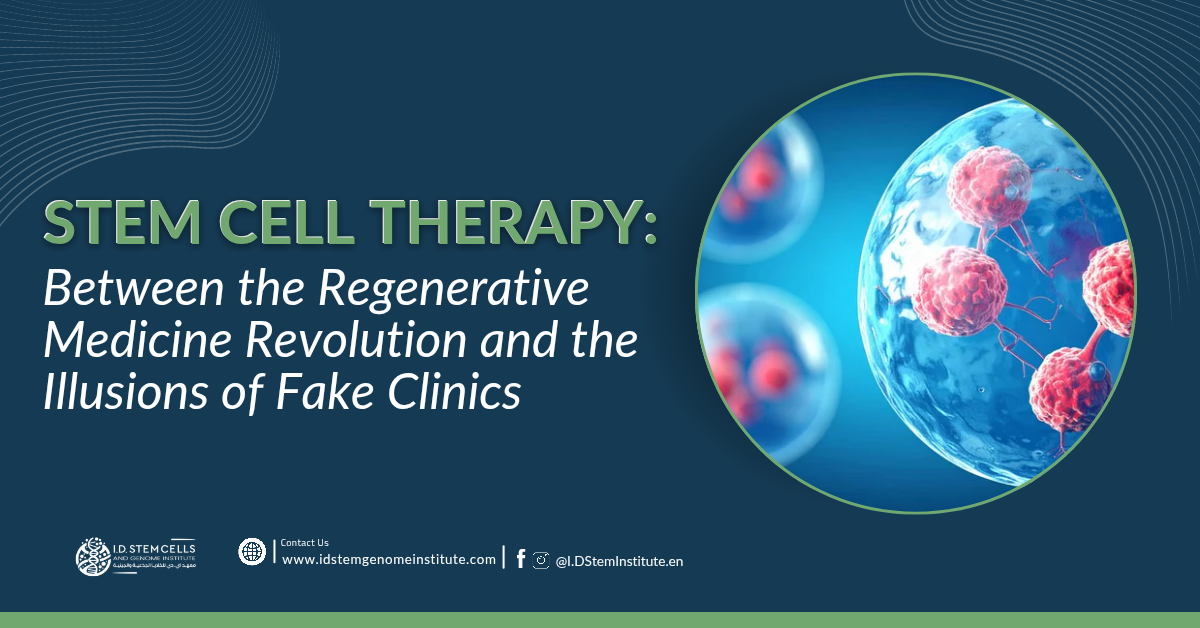
In a world accelerating toward medical discoveries that are rewriting the future of treatment, regenerative medicine has emerged as a scientific paradise that holds the promise of treatments that were unimaginable years ago. While the United States has approved immunotherapy for cancer, which relies on stimulating the immune system to attack tumors, Europe has achieved success in using mesenchymal stem cells (MSCs) to treat incurable diseases. These scientific breakthroughs have transformed stem cells from a mere academic term into a tangible hope for millions of patients, especially those whose diseases are managed with medications that alleviate symptoms without addressing the root causes.
Stem Cells: The Body's Hidden Savior
Stem cells are like the body's reserve soldiers, capable of transforming into any tissue or organ thanks to two unique properties: self-renewal and differentiation. These abilities have made them the focus of research that attempts to repair damaged organs, whether by activating existing stem cells in the body or by transplanting new cells to restore the lost balance. The cells used vary, including:
Stem Cells: The Body's Hidden Savior
Stem cells are like the body's reserve soldiers, capable of transforming into any tissue or organ thanks to two unique properties: self-renewal and differentiation. These abilities have made them the focus of research that attempts to repair damaged organs, whether by activating existing stem cells in the body or by transplanting new cells to restore the lost balance. The cells used vary, including:
Embryonic stem cells (hPSCs): These can develop into any cell type in the body, giving them great flexibility. However, their use raises ethical and practical challenges.
Adult stem cells (such as MSCs): These are extracted from adult tissues (such as bone marrow or fat), and although less flexible, they are considered a relatively safe option.
Progenitor cells: Specialized cells that regenerate specific tissues, such as the liver or skin.
The other side: "Therapeutic selfie" clinics and the risk of false claims.
Despite their enormous potential, stem cells have become a commodity in a dangerous parallel market. Private clinics have proliferated, promoting "magic injections" that treat everything from paralysis to aging, without scientific evidence or oversight. One of the most shocking incidents occurred in 2017, when injecting cells taken from patients' own fat into the eyes of three people with macular degeneration caused complete blindness. These cases revealed a disturbing loophole.
Adult stem cells (such as MSCs): These are extracted from adult tissues (such as bone marrow or fat), and although less flexible, they are considered a relatively safe option.
Progenitor cells: Specialized cells that regenerate specific tissues, such as the liver or skin.
The other side: "Therapeutic selfie" clinics and the risk of false claims.
Despite their enormous potential, stem cells have become a commodity in a dangerous parallel market. Private clinics have proliferated, promoting "magic injections" that treat everything from paralysis to aging, without scientific evidence or oversight. One of the most shocking incidents occurred in 2017, when injecting cells taken from patients' own fat into the eyes of three people with macular degeneration caused complete blindness. These cases revealed a disturbing loophole.
Challenges: How do we differentiate science from witchcraft?
The problem lies not in the stem cells themselves, but in their irresponsible use. Many clinics exploit patients' despair and make false promises, taking advantage of:
Lax regulations in some countries.
General ignorance about how stem cells work, with some portraying them as "human spare parts" ready to be replaced.
The complexity of clinical research, which requires years of testing to ensure efficacy and safety.
Challenges: How do we differentiate science from witchcraft?
The problem lies not in the stem cells themselves, but in their irresponsible use. Many clinics exploit patients' despair and make false promises, taking advantage of:
- Lax regulations in some countries.
- General ignorance about how stem cells work, with some portraying them as "human spare parts" ready to be replaced.
- The complexity of clinical research, which requires years of testing to ensure efficacy and safety.