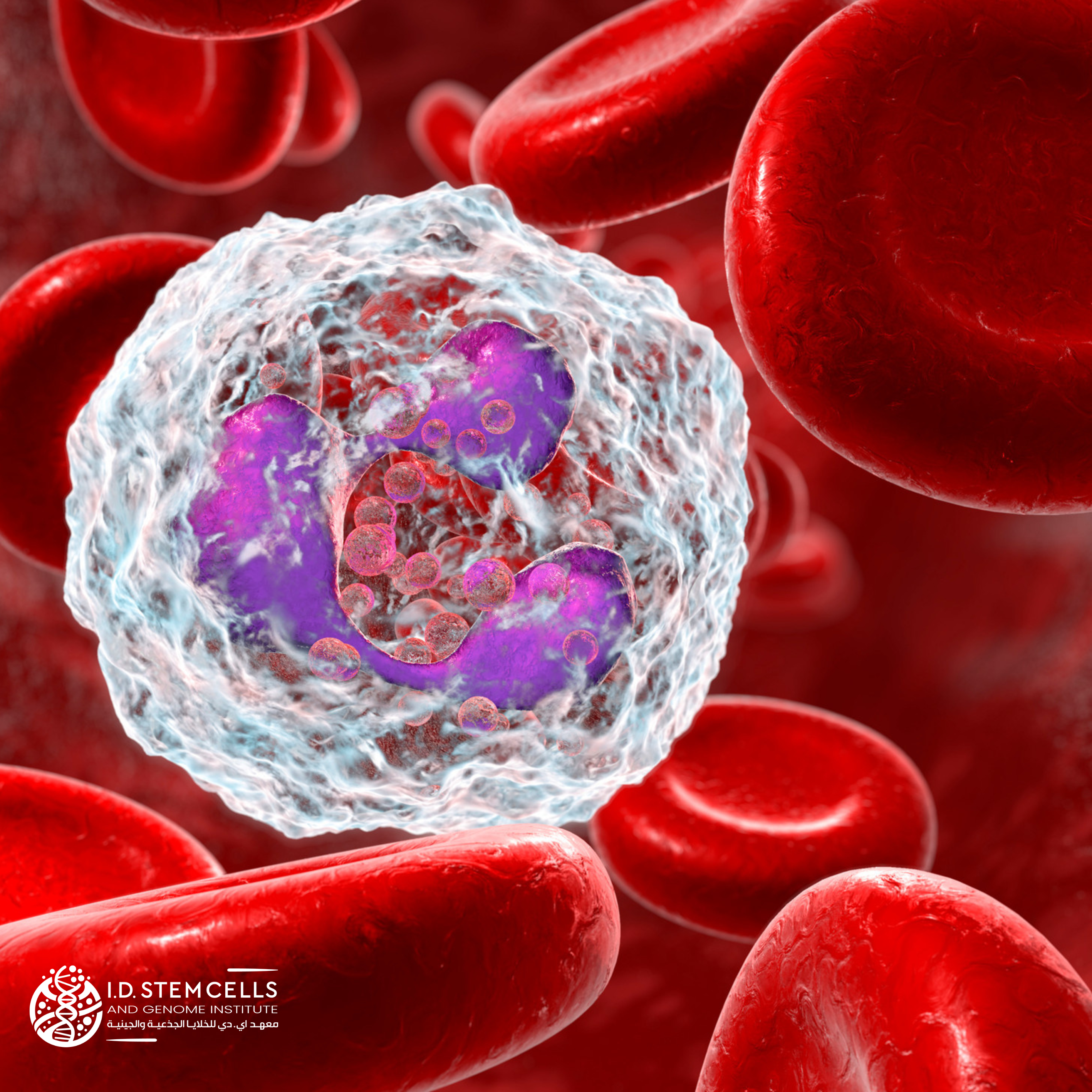
Neutrophils, the most common type of granulocyte, constitute 40–70% of all human leukocytes. Approximately 100–200 billion neutrophils are generated daily in humans through hematopoiesis in the bone marrow. Conventional estimates place the circulating half-life of neutrophils at equilibrium at 4–18 hours. A recent study using advanced techniques has established a more accurate half-life of approximately 19 hours, which is still less than a day.
However, neutrophils within a tumor have a relatively long lifespan, with evidence demonstrating that they can persist for more than 5 days. Neutrophils are traditionally considered short-lived effector cells of the innate immune system and the primary line of defense against extracellular pathogens and effector cells in acute inflammation. Their short lifespan contributes to immune system efficiency,12 and a significant decrease in circulating neutrophils leads to severe immunodeficiency in humans.13,14 However, neutrophils are more complex than initially thought, exhibiting significant functional and phenotypic heterogeneity, particularly in pathological contexts such as inflammation and cancer, contributing to the development of various diseases.

They are integral to the regulation of immune responses, mediated by a variety of cell surface receptors. Toll-like receptors recognize microbial structures to prevent pathogen invasion, while Fcγ receptors and C-type lectins are pivotal in activating the adaptive immune response. Other receptors, such as G protein-coupled receptors (GPRs)—also known as transmembrane receptors (TMRs)—and receptor tyrosine kinases and adhesion molecules such as selectin/selectin ligands and integrins, are involved in diverse neutrophil functional activities. Following receptor binding to ligands, multiple downstream signal transduction pathways are activated, regulating transcription factors through phosphorylation cascades that mediate many neutrophil functions.
Therefore, understanding the regulatory relationship between neutrophil receptors and their downstream signaling pathways contributes to elucidating the diversity of neutrophils and their functions in both health and disease.