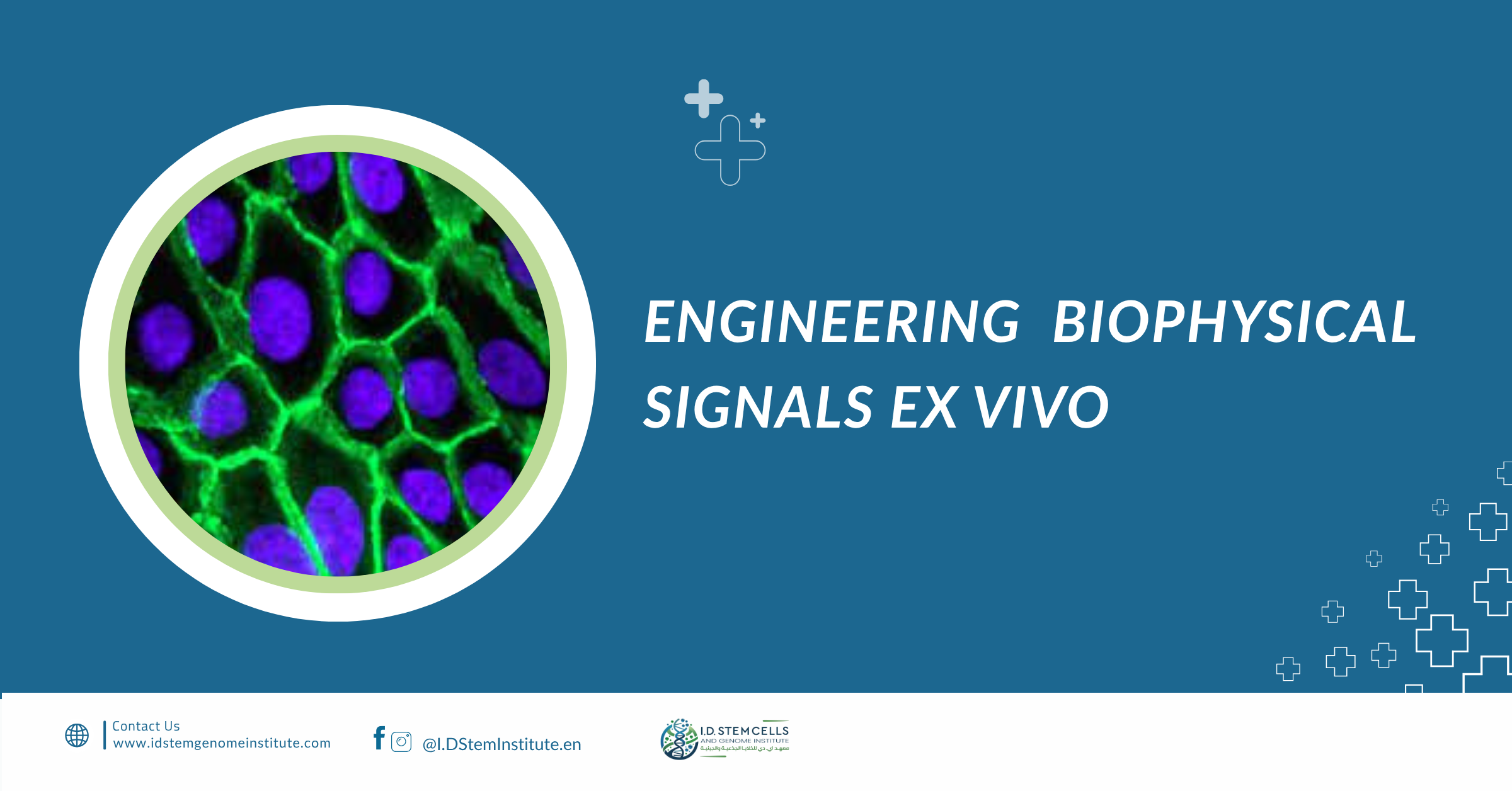
Biophysical properties such as substrate stiffness, geometry, and extracellular matrix (ECM) composition have guided the engineering of culture systems that attempt to mimic the structure of the MuSC niche.
Unlike rigid plastic cell culture dishes, culturing multicellular stem cells on soft hydrogels that mimic the elastic modulus of muscle tissue (≅12 kPa) supports self-renewal in vitro. Electromagnetic fields replicated many of the physical signals of muscle tissue in terms of geometry, elastic modulus, ECM composition, and structural organization. This system has been used to maintain MuSC quiescence, allowing a window for genetic manipulation (such as gene editing) of the cells ex vivo while maintaining their self-renewal potential after transplantation. The ECM is also an integral part of the MuSC niche and consists of a mixture of collagen, fibronectin, and laminin, which contribute to MuSC maintenance.
It has also been shown that mimicking the specific niche composition of the ECM in vitro is an effective strategy for helping expand immature MuSCs. For example, recent studies have identified certain forms of laminin as a key component of the MuSC niche.
A culture platform including recombinant Laminin-E8 molecules has supported the expansion of murine and human MuSCs with enhanced engraftment potential.