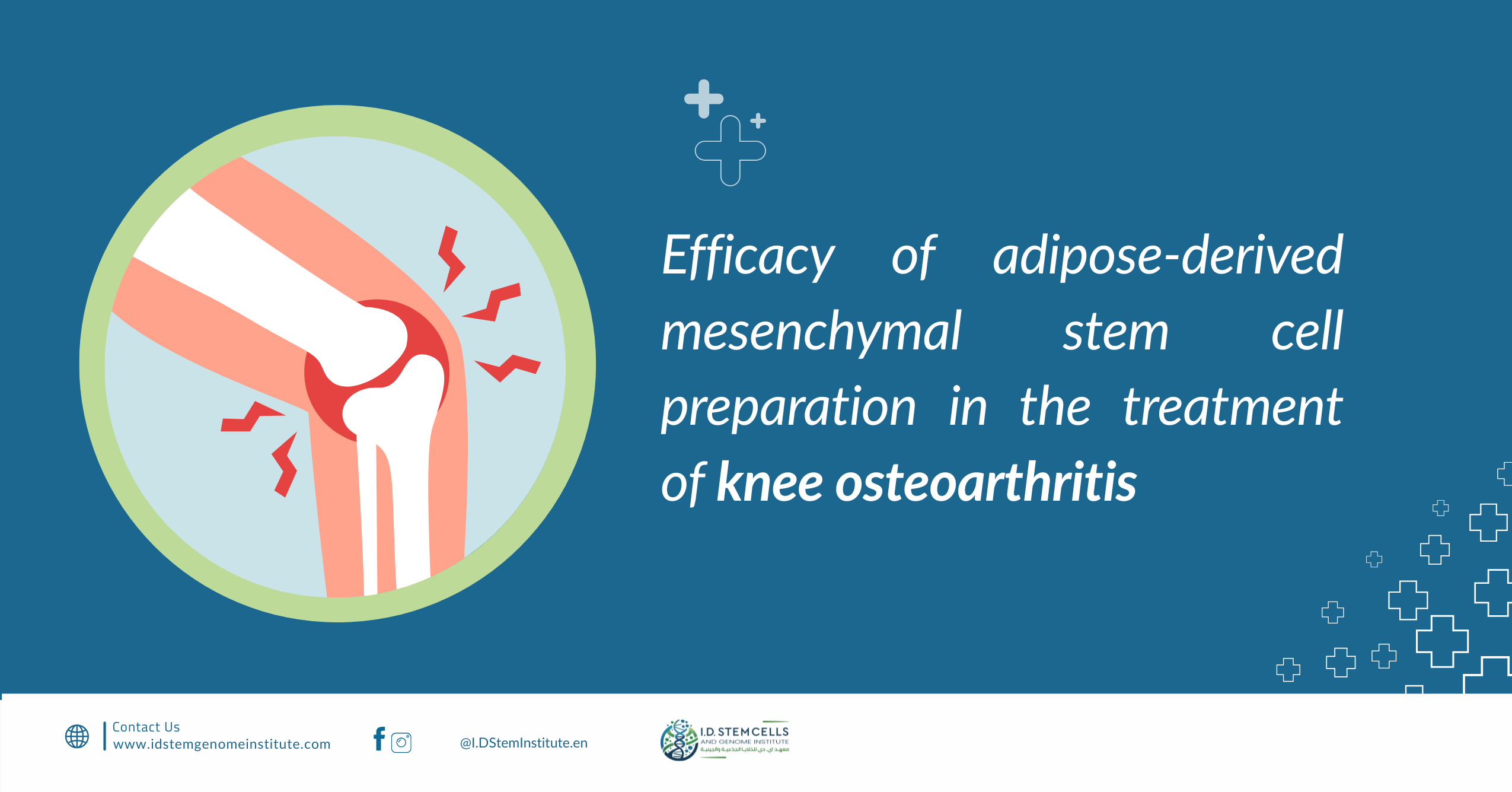
Globally, more than 650 million individuals aged 40 years or older are affected by knee osteoarthritis (OA).
This progressive condition is a major cause of disability and is associated with a significant economic and healthcare burden. In the absence of disease-modifying therapy, current management of knee osteoarthritis remains limited, with total knee replacement (TKR) considered when conservative treatments fail. Intra-articular (IA) therapies, which aim to improve pain and function, are frequently considered. The most common IA treatments are corticosteroids and viscoelastic (hyaluronic acid) supplements, with the increasing use of biologics, including platelet-rich plasma. MSCs have been observed to directly modulate inflammation by suppressing inflammatory cell proliferation,
reducing pro-inflammatory cytokines (IL-1 and IL-6), polarizing M1 macrophages to the anti-inflammatory M2 phenotype, and inhibiting TNFα with the expression of soluble TNF receptor-1 (sTNFR1). Inhibiting such inflammatory cytokines reduces the expression of nerve growth factor, inhibiting nociceptive sensitization, leading to improved pain. Furthermore, MSC secretion of trophic cytokines, including transforming growth factor-β1 (TGFβ1), may promote local tissue repair. Allogeneic MSC preparations offer the potential for a scalable "off-the-shelf" therapy. Importantly, due to their lack of expression of immune-related surface markers, MSCs are considered immune-evasive and safe for use in genetically mismatched recipients.