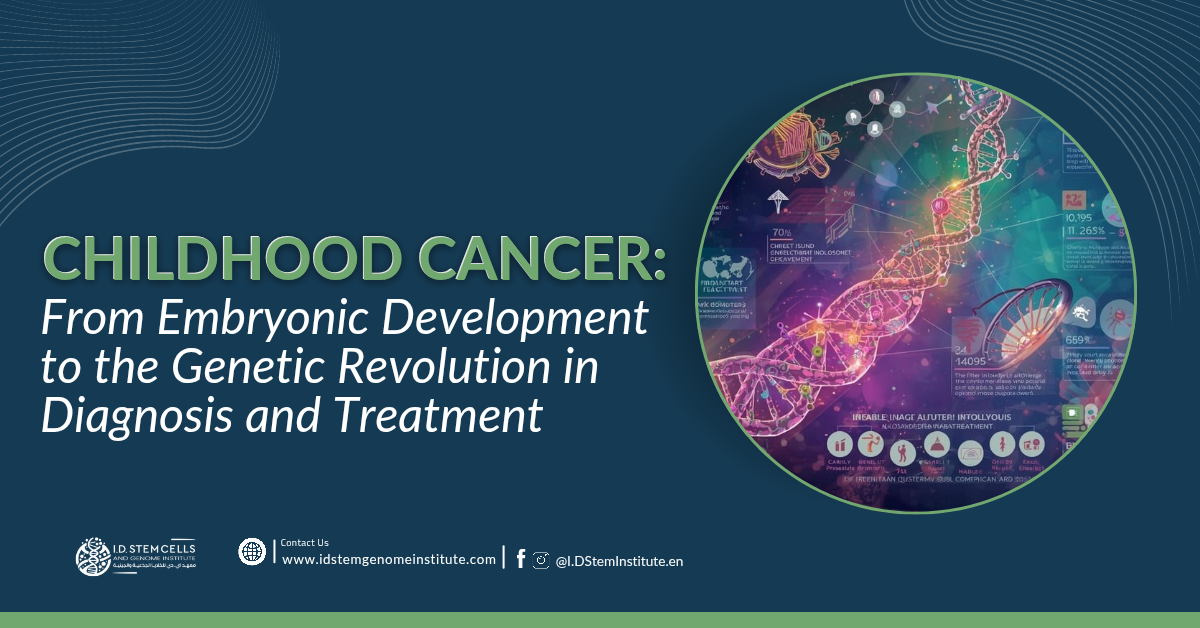
Childhood cancer is defined as a group of malignant tumors affecting individuals from birth to 18 years of age. This type of cancer differs radically from adult cancers. While adult tumors are often linked to environmental factors and the accumulation of genetic mutations resulting from aging or lifestyle, childhood cancers typically originate from primitive embryonic cells undergoing rapid genetic transformations.
Histological Classification and Common Types
Childhood tumors are characterized by their high capacity for rapid growth and are medically classified according to their histological origin:
Leukemia: This accounts for approximately 30% of cases, with acute lymphoblastic leukemia being the most common. It is characterized by the bone marrow's failure to produce healthy blood cells due to the proliferation of blast cells.
Central Nervous System Tumors: These are the second most common type and include tumors such as glioblastoma and medulloblastoma. Their danger lies in their anatomical location and their impact on vital functions.
Neuroblastoma: A tumor that originates in nerve tissue outside the brain, often starting in the adrenal glands located above the kidneys.
Kidney and bone tumors: Such as Wilms tumor, which affects the kidneys, and Ewing sarcoma (or osteosarcoma), which targets rapidly growing bone structures.
Histological Classification and Common Types
Childhood tumors are characterized by their high capacity for rapid growth and are medically classified according to their histological origin:
Leukemia: This accounts for approximately 30% of cases, with acute lymphoblastic leukemia being the most common. It is characterized by the bone marrow's failure to produce healthy blood cells due to the proliferation of blast cells.
Central Nervous System Tumors: These are the second most common type and include tumors such as glioblastoma and medulloblastoma. Their danger lies in their anatomical location and their impact on vital functions.
Neuroblastoma: A tumor that originates in nerve tissue outside the brain, often starting in the adrenal glands located above the kidneys.
Kidney and bone tumors: Such as Wilms tumor, which affects the kidneys, and Ewing sarcoma (or osteosarcoma), which targets rapidly growing bone structures.
Etiological Framework (Causes and Origins)
At the molecular level, the precise causes are still under investigation, but science focuses on the following areas:
Initial Genetic Mutations: Most childhood cancers result from random mutations in DNA that occur during cell division in early developmental stages and are not necessarily inherited.
Etiological Framework (Causes and Origins)
At the molecular level, the precise causes are still under investigation, but science focuses on the following areas:
Initial Genetic Mutations: Most childhood cancers result from random mutations in DNA that occur during cell division in early developmental stages and are not necessarily inherited.
Genetic Predisposition: Some cancers are associated with specific genetic syndromes, such as Li-Fraumeni syndrome, which results from a defect in the p53 tumor suppressor gene.
Embryonic Development: Many childhood tumors arise from the remnants of embryonic cells that were supposed to differentiate into organs but continued to divide uncontrollably.
Genetic Predisposition: Some cancers are associated with specific genetic syndromes, such as Li-Fraumeni syndrome, which results from a defect in the p53 tumor suppressor gene.
Embryonic Development: Many childhood tumors arise from the remnants of embryonic cells that were supposed to differentiate into organs but continued to divide uncontrollably.
Advanced Diagnostic Protocols
Modern medicine relies on precise techniques to ensure early diagnosis:
Molecular and Cytogenetic Analysis: To examine chromosomes and identify gene mutations that help predict the tumor's response to treatment.
Functional Imaging: Such as positron emission tomography (PET) to assess the metabolic activity of cancer cells and determine the extent of their spread.
Flow cytometry: A technique used especially in leukemia to identify the type of affected cells with extreme accuracy through their surface markers.
Advanced Diagnostic Protocols
Modern medicine relies on precise techniques to ensure early diagnosis:
Molecular and Cytogenetic Analysis: To examine chromosomes and identify gene mutations that help predict the tumor's response to treatment.
Functional Imaging: Such as positron emission tomography (PET) to assess the metabolic activity of cancer cells and determine the extent of their spread.
Flow cytometry: A technique used especially in leukemia to identify the type of affected cells with extreme accuracy through their surface markers.
Modern Treatment Strategies (Multi-Approach)
Intensive Chemotherapy: Used to kill rapidly dividing cells. Children often respond better to this treatment than adults because their healthy tissues are better able to recover.
Targeted Therapy: Drugs designed to attack specific proteins or genes within cancer cells without harming healthy cells.
Proton Therapy: An advanced type of radiation that allows high doses to be directed at the tumor while protecting sensitive surrounding tissues. This is crucial for treating brain tumors in children.
CAR-T Cell Therapy: A revolution in leukemia treatment, where a patient's immune cells are genetically modified in the laboratory to recognize and destroy cancer.
Modern Treatment Strategies (Multi-Approach)
Intensive Chemotherapy: Used to kill rapidly dividing cells. Children often respond better to this treatment than adults because their healthy tissues are better able to recover.
Targeted Therapy: Drugs designed to attack specific proteins or genes within cancer cells without harming healthy cells.
Proton Therapy: An advanced type of radiation that allows high doses to be directed at the tumor while protecting sensitive surrounding tissues. This is crucial for treating brain tumors in children.
CAR-T Cell Therapy: A revolution in leukemia treatment, where a patient's immune cells are genetically modified in the laboratory to recognize and destroy cancer.
Challenges and Future Prospects
Despite high survival rates exceeding 80% for many types of cancer, medicine faces the challenge of "late effects." Surviving children may experience developmental, fertility, or heart function problems later in life as a result of the strength of the treatments. Therefore, current research focuses on minimizing toxicity while maintaining efficacy.
At the I.D. Stem Cells and Genome Institute, we keep abreast of the latest scientific developments in the field of stem cell and gene therapy and regenerative medicine. If you are interested in learning more about the potential benefits of these treatments and the latest research findings, please feel free to contact us.
Challenges and Future Prospects
Despite high survival rates exceeding 80% for many types of cancer, medicine faces the challenge of "late effects." Surviving children may experience developmental, fertility, or heart function problems later in life as a result of the strength of the treatments. Therefore, current research focuses on minimizing toxicity while maintaining efficacy.
At the I.D. Stem Cells and Genome Institute, we keep abreast of the latest scientific developments in the field of stem cell and gene therapy and regenerative medicine. If you are interested in learning more about the potential benefits of these treatments and the latest research findings, please feel free to contact us.