
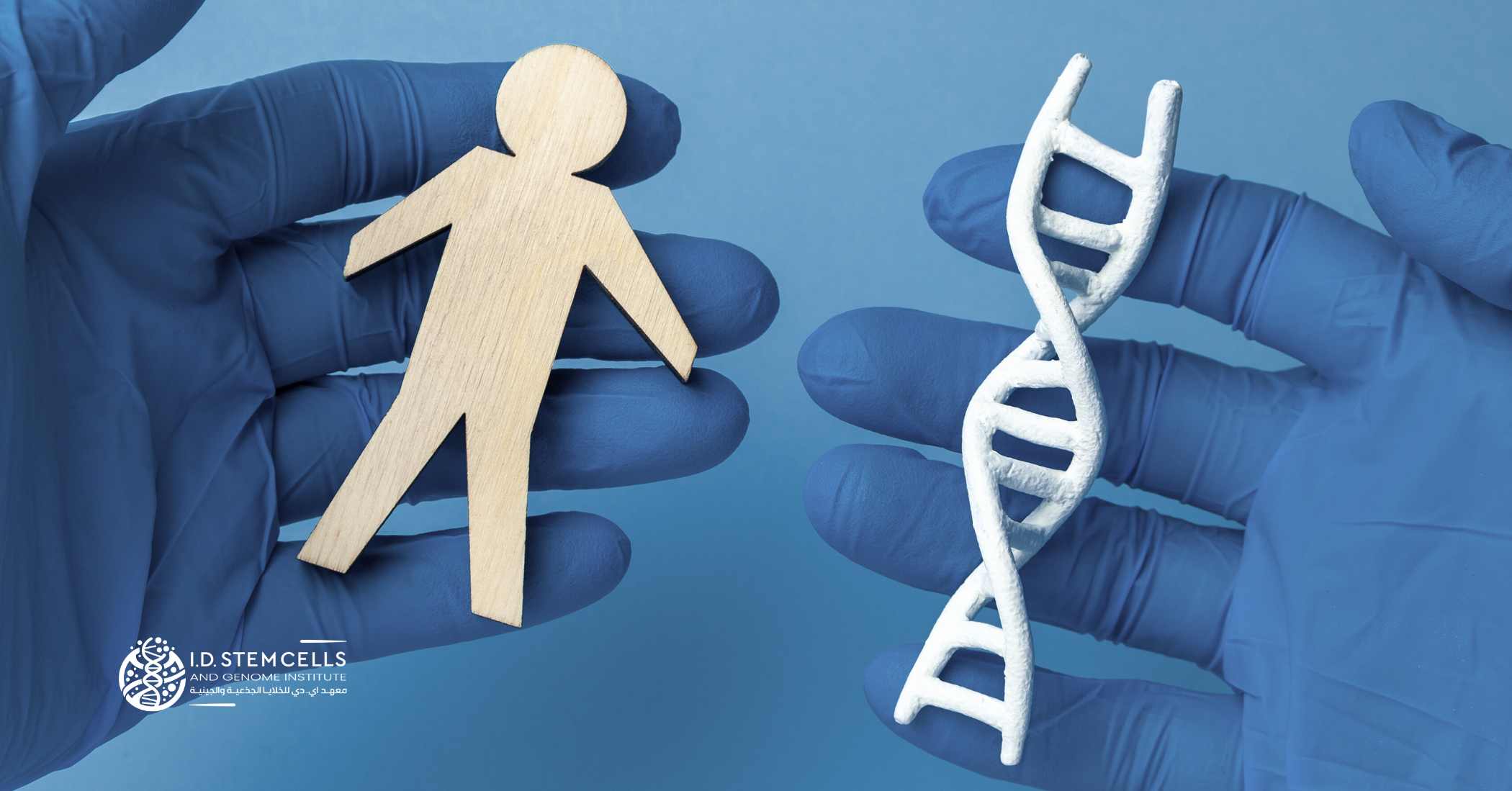
Gene therapy is one of the most significant developments in modern medicine, representing a paradigm shift in our understanding and treatment of diseases. This treatment relies on modifying the genetic material (DNA) within cells to treat or prevent genetic diseases.
Dr. Islam Dababseh, Director of the ID Institute for Stem Cell and Gene Therapy, gives us a brief history of this type of treatment.
A General Introduction to Gene Therapy
The European Medicines Agency (EMA) defines a gene therapy medicinal product as a biological product that meets the following two characteristics:
1. Contains an active substance containing or consisting of recombinant nucleic acid that is used in or administered to humans for the purpose of regulating, repairing, replacing, adding, or deleting a genetic sequence.
2. Its therapeutic, prophylactic, or diagnostic effect is directly related to the recombinant DNA sequence it contains, or to the gene expression product of that sequence.
A General Introduction to Gene Therapy
The European Medicines Agency (EMA) defines a gene therapy medicinal product as a biological product that meets the following two characteristics:
1. Contains an active substance containing or consisting of recombinant nucleic acid that is used in or administered to humans for the purpose of regulating, repairing, replacing, adding, or deleting a genetic sequence.
2. Its therapeutic, prophylactic, or diagnostic effect is directly related to the recombinant DNA sequence it contains, or to the gene expression product of that sequence.
Gene therapy medicinal products must not include vaccines against infectious diseases.
The U.S. Food and Drug Administration (FDA) defines gene therapy as products that "mediate their effects by transcription or translation of genetic material delivered or by integration into the host genome, delivered as nucleic acids, viruses, or genetically."
Engineered microorganisms. Products can be used to modify cells in vivo or transferred to cells outside the body before being administered to the recipient.
Generally, gene therapy can be classified into two categories: germline gene therapy and somatic gene therapy.
The difference between these two approaches is that in somatic gene therapy, the genetic material is introduced into some target cells, but the change is not transmitted to the next generation. In germline gene therapy, the therapeutic or modified gene is transmitted to the next generation. This difference is important because current legislation only allows gene therapy on somatic cells.
Discovery of the Idea of Gene Therapy
The history of gene modification dates back to the late 19th century, when ideas about heredity and inheritance began to crystallize. With the discovery of the structure of DNA in the mid-20th century, this opened the door to a deeper understanding of the genetic mechanisms behind disease.
First Steps
The 1970s and 1980s: This period saw the first experimental attempts at gene editing in the laboratory. Scientists were able to isolate and amplify genes, paving the way for animal experiments.
Discovery of the Idea of Gene Therapy
The history of gene modification dates back to the late 19th century, when ideas about heredity and inheritance began to crystallize. With the discovery of the structure of DNA in the mid-20th century, this opened the door to a deeper understanding of the genetic mechanisms behind disease.
First Steps
The 1970s and 1980s: This period saw the first experimental attempts at gene editing in the laboratory. Scientists were able to isolate and amplify genes, paving the way for animal experiments.

The 1990s: Experiments moved to the clinical stage, with the first human trials conducted. These trials aimed to treat rare genetic diseases, such as severe immunodeficiency.
Recent Developments
The 21st Century: This century witnessed tremendous advances in gene therapy, as scientists were able to develop more precise and effective gene editing techniques.
CRISPR-Cas9 technology: This technology revolutionized the field of genetic engineering, making gene editing much easier and faster.
Regulatory Approval: Regulatory bodies in various countries began approving the use of some gene therapies, encouraging further investment in this field.
Future Challenges
Despite significant progress, gene therapy still faces some challenges, including:
High cost: Gene therapies are expensive, making them inaccessible to everyone.
Possible side effects: Gene editing may lead to unexpected side effects.
Ethical issues: Gene therapy raises numerous ethical issues, such as embryo design and human genome editing.
Gene therapy represents great hope for millions of patients suffering from incurable genetic diseases. As progress in this field continues, we can expect to develop more effective and safer treatments in the near future.
Future Challenges
Despite significant progress, gene therapy still faces some challenges, including:
High cost: Gene therapies are expensive, making them inaccessible to everyone.
Possible side effects: Gene editing may lead to unexpected side effects.
Ethical issues: Gene therapy raises numerous ethical issues, such as embryo design and human genome editing.
Gene therapy represents great hope for millions of patients suffering from incurable genetic diseases. As progress in this field continues, we can expect to develop more effective and safer treatments in the near future.