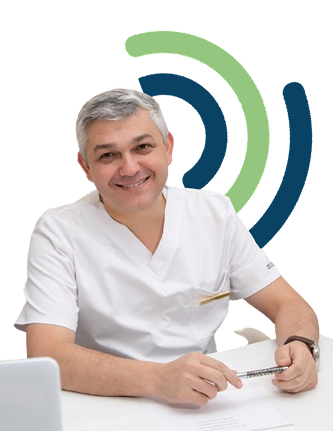
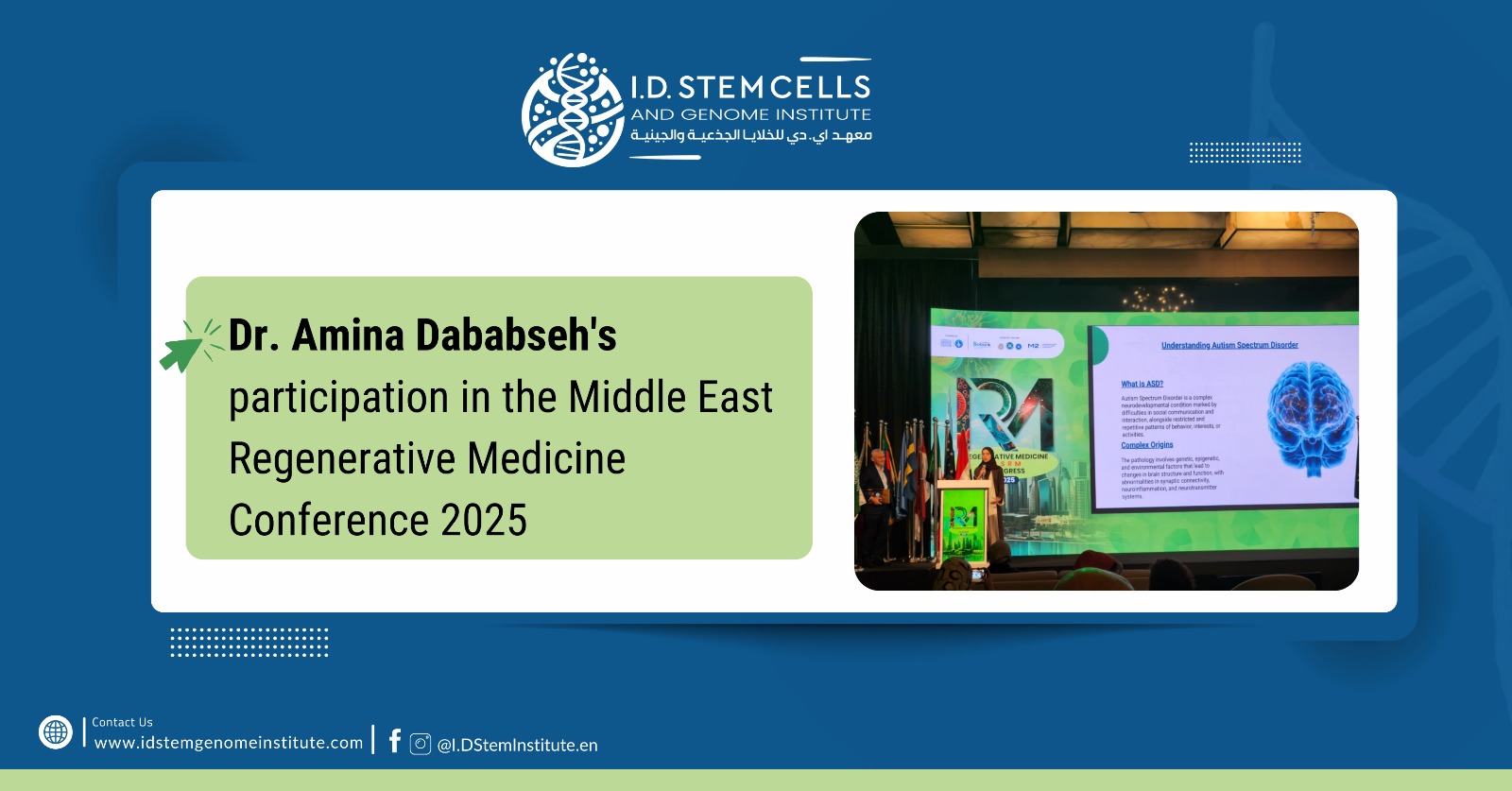
In a prominent presentation during the "Middle East Regenerative Medicine Conference 2025," Dr. Amina Dababseh presented the results of a comprehensive study investigating the safety and efficacy of using Mesenchymal Stem Cells (MSCs) derived from umbilical cord blood as a potential therapeutic approach for children with Autism Spectrum Disorder (ASD).
Understanding the Challenge and the Innovative Approach
The study explained that Autism Spectrum Disorder is a complex neurodevelopmental condition primarily affecting social communication and interaction, accompanied by restricted and repetitive behaviors. While current treatments focus on behavioral intervention and symptom management, a definitive cure is not yet available.This study presents stem cell therapy as a modern and innovative option. The focus was on cells derived from umbilical cord blood and Wharton's Jelly due to their strong regenerative properties. One of the proposed therapeutic mechanisms is the ability of these cells to modulate the immune response and mitigate neuroinflammation, which is believed to play a role in the development of Autism Spectrum Disorder.
Understanding the Challenge and the Innovative Approach
The study explained that Autism Spectrum Disorder is a complex neurodevelopmental condition primarily affecting social communication and interaction, accompanied by restricted and repetitive behaviors. While current treatments focus on behavioral intervention and symptom management, a definitive cure is not yet available.This study presents stem cell therapy as a modern and innovative option. The focus was on cells derived from umbilical cord blood and Wharton's Jelly due to their strong regenerative properties. One of the proposed therapeutic mechanisms is the ability of these cells to modulate the immune response and mitigate neuroinflammation, which is believed to play a role in the development of Autism Spectrum Disorder.
Study Design and Methodology
The study was designed as a clinical trial (Phase I/II) and included 27 children aged between 2.5 and 12 years.
Each participant received four treatment sessions over 9 months, with a 12-week interval between sessions, administered via subcutaneous injection.
The cells were processed in specialized neurogenic media to enhance their differentiation into neural cells.Safety and efficacy were assessed using standardized evaluation tools, primarily the Childhood Autism Rating Scale (CARS) and the Autism Treatment Evaluation Checklist (ATEC), in addition to measuring inflammatory markers (MDC and TARC).
Study Design and Methodology
The study was designed as a clinical trial (Phase I/II) and included 27 children aged between 2.5 and 12 years.
Each participant received four treatment sessions over 9 months, with a 12-week interval between sessions, administered via subcutaneous injection.
The cells were processed in specialized neurogenic media to enhance their differentiation into neural cells.Safety and efficacy were assessed using standardized evaluation tools, primarily the Childhood Autism Rating Scale (CARS) and the Autism Treatment Evaluation Checklist (ATEC), in addition to measuring inflammatory markers (MDC and TARC).
Key Results Presented
Dr. Dababseh highlighted a set of positive and encouraging findings:
Safety First: The treatment showed an excellent safety profile, with no serious treatment-related Adverse Events (SAEs) reported throughout the study.
Most side effects were mild and transient (such as slight fever or fatigue) and resolved without medical intervention.
Significant Clinical Improvement: Statistical analysis (MANOVA) showed significant improvements in all behavioral and inflammatory measures ($p < 0.01$), with these improvements peaking at the 12-month follow-up visit.
Key Results Presented
Dr. Dababseh highlighted a set of positive and encouraging findings:
Safety First: The treatment showed an excellent safety profile, with no serious treatment-related Adverse Events (SAEs) reported throughout the study.
Most side effects were mild and transient (such as slight fever or fatigue) and resolved without medical intervention.
Significant Clinical Improvement: Statistical analysis (MANOVA) showed significant improvements in all behavioral and inflammatory measures ($p < 0.01$), with these improvements peaking at the 12-month follow-up visit.
Clear Impact on Symptoms:
11 participants showed a marked improvement in CARS scores, moving them to milder categories of autism symptoms.
Notably, 7 participants (63.6% of the group of 11) successfully transitioned from a diagnosis of "Mild or Moderate Autism" to "Below the Autism Threshold."
4 participants (36.4%) also improved from "Severe Autism" to "Below the Autism Threshold."
Clear Impact on Symptoms:
11 participants showed a marked improvement in CARS scores, moving them to milder categories of autism symptoms.
Notably, 7 participants (63.6% of the group of 11) successfully transitioned from a diagnosis of "Mild or Moderate Autism" to "Below the Autism Threshold."
4 participants (36.4%) also improved from "Severe Autism" to "Below the Autism Threshold."
Reduction in Inflammation:
A decrease in the levels of inflammatory markers (MDC and TARC) was observed in 7 participants (63.6%), which coincided with clinical improvement.
Behavioral and Functional Improvements:
Noted improvements included increased awareness of the surroundings, improved social communication (verbal and expressive), better motor skills, and a reduction in repetitive, stereotyped behaviors.
Reduction in Inflammation:
A decrease in the levels of inflammatory markers (MDC and TARC) was observed in 7 participants (63.6%), which coincided with clinical improvement.
Behavioral and Functional Improvements:
Noted improvements included increased awareness of the surroundings, improved social communication (verbal and expressive), better motor skills, and a reduction in repetitive, stereotyped behaviors.
Conclusion and Future Outlook
The presentation concluded that this study offers promising evidence supporting the potential for Cord Blood-Derived Mesenchymal Stem Cells (UC-MSCs) to be a safe and effective therapeutic option for children with Autism Spectrum Disorder.
Conclusion and Future Outlook
The presentation concluded that this study offers promising evidence supporting the potential for Cord Blood-Derived Mesenchymal Stem Cells (UC-MSCs) to be a safe and effective therapeutic option for children with Autism Spectrum Disorder.